

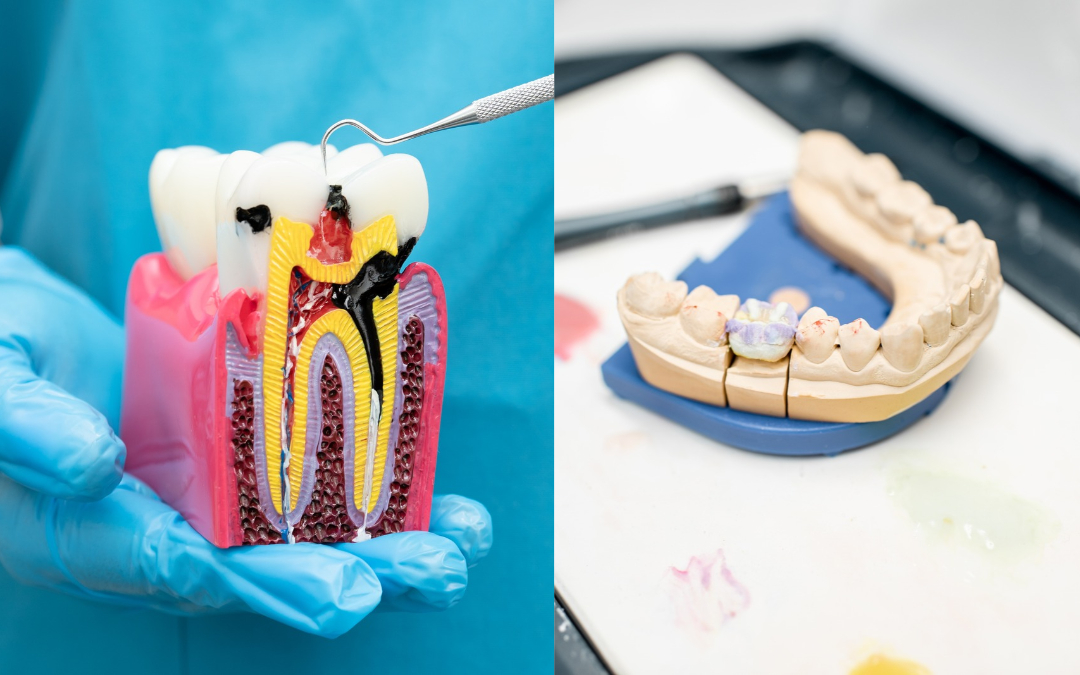
Finding out that you need a root canal and a dental crown can bring up several questions, especially when it comes to scheduling. You may wonder whether both treatments can be completed during one appointment or if you’ll need to make multiple trips to the dental office. Getting everything taken care of in a single day sounds appealing, particularly when you have work, family responsibilities, or other commitments to manage.
The answer is that same-day root canal and crown treatment is possible in certain situations. However, the approach depends on the condition of your tooth, the extent of the infection, and the technology available at your dental office. While some patients can receive their permanent restoration shortly after root canal treatment, others may need a temporary crown and a follow-up visit.
For patients considering root canal therapy in Mesa, understanding how these procedures work together can make the treatment process less overwhelming. A dental examination helps determine whether your tooth is suitable for immediate restoration or would benefit from a more gradual approach.
Understanding the Purpose of a Root Canal and Dental Crown
Although root canals and crowns are often recommended together, they perform two different jobs. Both treatments help preserve a damaged tooth, but each addresses a specific concern.
What Happens During Root Canal Treatment?
The soft tissue inside your tooth, called the pulp, contains nerves and blood vessels. Deep decay, cracks, or dental trauma can allow bacteria to reach this area, resulting in inflammation or infection.
During a root canal, your dentist removes the damaged or infected pulp, carefully cleans and shapes the internal canals, and seals the space to reduce the risk of further infection. The goal is to eliminate the source of the problem while keeping your natural tooth in place.
Once the procedure is complete, the tooth may feel better, but it does not automatically regain its original strength. Depending on how much natural structure remains, additional protection may be necessary.
Why Is a Dental Crown Often Recommended?
A dental crown is a custom-made covering that fits over the visible portion of a tooth. It restores the tooth’s shape and function while protecting the remaining structure from everyday chewing pressure.
After root canal treatment, a tooth with significant structural damage may become more vulnerable to cracking or breaking. A crown helps distribute biting forces and provides additional support.
Patients exploring dental crowns in Mesa may have several restoration options depending on their needs, including ceramic, porcelain, and other crown materials. Your dentist can recommend an appropriate option based on the tooth’s location, remaining structure, and functional requirements.
Is It Possible to Complete Both Procedures in One Appointment?
Yes, some dental offices can perform a root canal and place a permanent crown during the same visit. However, this is not a standard option for every patient.
The decision involves more than simply having enough appointment time. Your dentist must first determine whether the infection can be managed appropriately, whether the tooth has enough healthy structure to support a crown, and whether immediate restoration is clinically suitable.
For patients seeking care from a Mesa dentist, access to modern restorative technology may also influence the available treatment options. Dental offices equipped with digital scanning and in-house crown fabrication systems can sometimes design, create, and place a permanent crown without sending impressions to an outside laboratory.
What Makes Same-Day Root Canal and Crown Treatment Possible?
Several clinical and technological factors determine whether both procedures can happen during one appointment.
The Condition of the Tooth
The amount of remaining healthy tooth structure plays an important role. If the tooth is stable and has enough support for a crown, immediate restoration may be an option.
However, extensive damage, complicated anatomy, or certain infection-related concerns may require a different treatment approach.
The Severity of the Infection
Your dentist needs to evaluate the infection before deciding when to place the permanent restoration. If the tooth has significant infection or complications, additional treatment or monitoring may be necessary.
The priority is to control the infection and create conditions that support successful healing rather than rushing to complete both procedures.
Availability of Same-Day Crown Technology
Some dental offices use advanced computer-aided design and manufacturing systems, such as CEREC, to produce crowns in-house.
A typical same-day crown process includes:
- Digital scanning: The dentist captures a detailed 3D image of the prepared tooth.
- Computerized design: Specialized software helps create a crown that matches the tooth’s shape and bite.
- In-office fabrication: A milling machine produces the restoration from a suitable dental material.
- Final placement: The dentist checks the fit, bite, and appearance before bonding the crown into position.
This technology can eliminate the waiting period associated with traditional laboratory-made crowns. However, having access to same-day equipment does not automatically mean immediate placement is the best clinical decision.
Your Dentist’s Treatment Assessment
Every tooth has different needs. Your dentist considers the location of the tooth, the number and shape of its canals, the amount of structural damage, and your overall oral health.
After evaluating these factors, your provider can explain whether completing both procedures in one visit is appropriate or whether separate appointments would offer a more predictable result.
When Is a Same-Day Crown a Suitable Option?
Immediate crown placement may be considered when several conditions are favorable.
For example, same-day treatment may work well when:
- The infection can be adequately treated during the appointment.
- The tooth has sufficient remaining structure to support the crown.
- The root canal procedure can be completed without unexpected complications.
- The dental office has the necessary digital scanning and crown fabrication equipment.
- Your dentist determines that immediate permanent restoration is appropriate.
Even when these conditions are met, the final decision depends on your individual clinical situation. Convenience should never take priority over the long-term health of your tooth.
Why Might You Need More Than One Appointment?
Although completing everything in one day sounds convenient, a traditional treatment schedule can be the better choice in many situations.
Here are some reasons your dentist may recommend separate visits:
Allowing Additional Evaluation
If the infection is extensive or the tooth has unusual canal anatomy, your dentist may need additional time to complete treatment and assess the results before placing a permanent crown.
Protecting the Tooth With a Temporary Restoration
When the permanent crown cannot be placed immediately, your dentist may use a temporary filling or restoration to protect the treated tooth. This helps prevent food particles and bacteria from entering the prepared area while you wait for your final crown.
Addressing Extensive Tooth Damage
Some teeth have lost a substantial amount of their natural structure because of decay or fractures. Your dentist may need to evaluate whether additional procedures are necessary before the tooth can safely support a crown.
Achieving an Accurate Final Restoration
Traditional crowns are often fabricated in a dental laboratory. This process gives the laboratory time to create a restoration based on detailed impressions or digital scans. A follow-up appointment allows your dentist to check the crown’s fit, appearance, and bite before permanently cementing it.
What Should You Expect After a Root Canal and Crown?
Whether you receive your crown on the same day or at a later appointment, some temporary sensitivity is possible.
The surrounding tissues may remain tender for several days, particularly if the tooth had significant inflammation before treatment. You might also notice mild discomfort when chewing or pressure around the treated area.
To support recovery:
- Choose softer foods while the tooth feels sensitive.
- Avoid chewing hard or sticky foods until your dentist gives you clearance.
- Brush twice daily and floss carefully around the treated area.
- Follow your dentist’s instructions for pain management.
- Contact your dental office if pain becomes severe, swelling develops, or your bite feels uneven.
If you have a temporary restoration, avoid putting unnecessary pressure on that tooth until the permanent crown is placed.
Final Thoughts
Getting a root canal and dental crown on the same day can be a convenient option, but it is not suitable for every situation. Your tooth’s condition, the severity of the infection, the amount of remaining natural structure, and the technology available at your dental office all influence the treatment timeline.
Some patients can complete both procedures in one appointment, while others benefit from a temporary restoration and a follow-up visit. Either approach can help protect your natural tooth when your dentist selects the treatment plan based on your individual needs.
The most important thing is to address infection promptly and restore the tooth properly. With appropriate treatment and regular dental care, you can maintain your tooth’s function and protect your smile for years to come.
If you need a root canal or dental crown, schedule an appointment with Rauch Family Dentistry in Mesa, AZ, today to discuss your treatment options and find the right approach for your dental health.
Frequently Asked Questions
Can a root canal and permanent crown be completed on the same day?
Yes, it is possible in selected cases. Your dentist must determine whether the tooth is suitable for immediate restoration and whether the dental office has the technology needed to fabricate and place a same-day crown.
How long does it take to get a root canal and crown?
A root canal generally takes around 60–90 minutes, although the time varies depending on the tooth and the complexity of the procedure. A same-day crown requires additional time for scanning, designing, milling, and placement. Traditional crowns usually require a separate appointment.
Is it necessary to get a crown after every root canal?
Not always. Back teeth, such as molars and premolars, often need crowns because they experience considerable chewing pressure. Some front teeth may be restored with other options if enough healthy structure remains. Your dentist will evaluate the tooth before recommending a restoration.
Are same-day dental crowns as durable as traditional crowns?
Same-day crowns can provide excellent durability when properly designed, fabricated, and placed. Their longevity depends on the material, the condition of the tooth, your bite, and how well you maintain your oral hygiene.
Will I experience pain during a root canal and crown procedure?
Local anesthesia is used to numb the treatment area, helping keep you comfortable during the procedure. You may experience mild soreness or sensitivity afterward, but this generally improves as the surrounding tissues recover.
Can I eat immediately after getting a same-day crown?
Your dentist will let you know when it is safe to eat. Depending on the type of restoration and bonding material, you may need to wait before eating. Initially, softer foods are a sensible choice, and very hard or sticky foods should be avoided.
What happens if I delay getting a crown after a root canal?
A tooth that needs a crown may become more vulnerable to fractures while waiting for its permanent restoration. A temporary filling offers some protection, but it is not a substitute for the recommended final crown. Follow your dentist’s timeline to reduce the risk of damage.